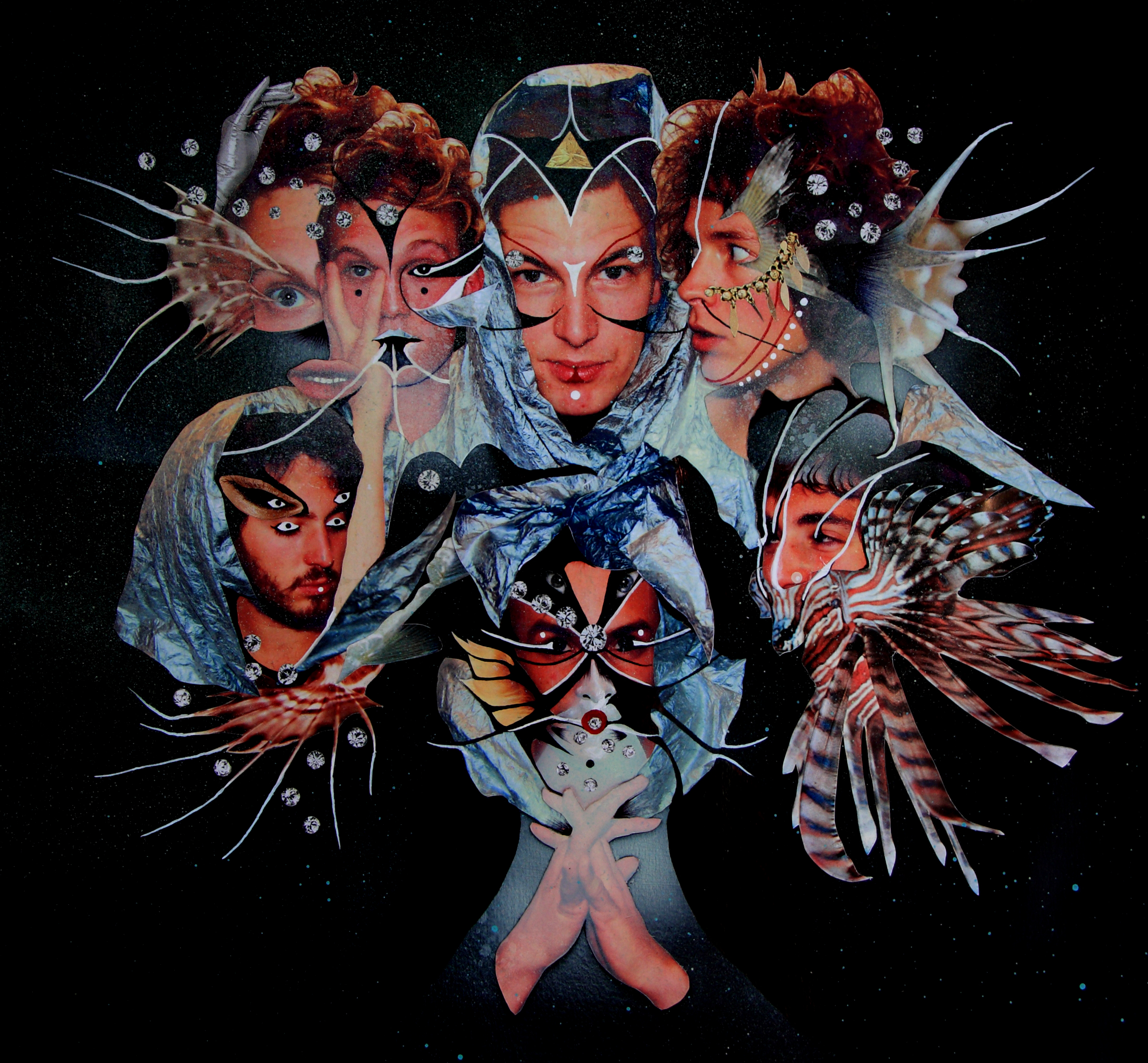
Rolling with the blackout crew

Jon Bauckham meets The Go! Team’s Ian Parton to discuss the band’s adventurous third album, Rolling Blackouts


It is six years since The Go! Team earned themselves a Mercury Prize nomination for their debut album, Thunder, Lightning, Strike. In a shortlist that included Hard-Fi and the Kaiser Chiefs, it was not particularly challenging to stand out as something ultimately refreshing from their contemporaries. Starting life as a solo project for Brighton resident Ian Parton, their debut embraced a cut-and-paste aesthetic, plundering samples from a variety of different sources and combining them to create something new altogether. “I’m a bit of a hoarder!” laughs Ian, when recalling the initial stages of the songwriting process. “I gather loads of ideas and listen back before whittling it down to my favourite bits. By then, even to your own ears, it can feel almost like someone else has done it.” New album Rolling Blackouts  continues this trend by taking conventional song structures and melding them with a mishmash of different influences, incorporating soundbites as diverse as old school hip-hop and Bollywood soundtracks.

But with a stronger emphasis on live instrumentation rather than sampling, it also stands as perhaps their most accessible record. “I think the main thing with this album was that I really wanted to make it more ‘sing-y’. I think that The Go! Team had become synonymous with just having a girl shouting over the music,” explains Ian. “I definitely wanted a bit more light and shade, a bit more variety and some space to breathe in between the songs. The last album was a bit fucking relentless. It was like someone poking you for half an hour!” That album was 2007’s Proof of Youth, notable for its guest  appearances from Public Enemy’s Chuck D and electro diva, Solex. Four years down the line, however, Rolling Blackouts picks up from where its predecessor may have faltered – and it hardly begins with a whimper. On ‘T.O.R.N.A.D.O.’, frontwoman Ninja spits tough-tongued cheerleading chants, layered over knockout brass arrangements. Such an opener reassures us that the band have not lost their swagger, drawing the listener into a globetrotting collection of songs, taking ideas from around the world and experimenting with unusual new instruments such as kalimbas and Omnichords. “I hate the word ‘journey’, but the album puts you in different places,” says Ian. “One minute you find yourself in a ticker tape parade with a marching band, and the next minute you’re in an office in Tokyo.”

The latter scenario refers to ‘Secretary Song’, featuring lead vocals from Deerhoof frontwoman Satomi Matsuzaki. “The idea for that really just came from the song backwards. You think about what kind of voice you would need to bring it to life and who you would imagine singing it, so you pull out all the stops to make it happen.” With the addition of typewriters, the track captures the buzz of Tokyo as a city at work, present also in the internal dialogue of Matsuzaki’s frustrated office assistant, counting down the hours until the end of her shift. In contrast, lead single ‘Buy Nothing Day’ shifts continent and drives the listener “straight down the Pacific Coast Highway”, with Best Coast’s Bethany Cosentino at the wheel, adding the same sun-kissed Californian splendour that characterises her own output. ‘Ready To Go Steady’ is of a similar vein, the chorus of which could easily have been retrieved from a time capsule buried by Phil Spector, with its coy ‘60s girl group leanings and Wall of Sound drum fills. “When I hear tracks like that, I think of high school proms, with the Prom Kings and Queens dancing like they’re in Carrie or something like that.”

Though perhaps without the blood and electrocution, there is definitely a romanticised, inherently stateside feel to fragments of the album. But Ian is keen to point out that there was no geographical agenda when he first began writing. “I wasn’t particularly fussed about making the record sound British,” he explains. “I liked the idea of it sounding global and international, but at the same time, I don’t kiss Yankee ass! I don’t think everything’s better in America.” But if there is one thing that can be agreed about the direction taken on Rolling Blackouts, it is that it offers a darker dimension than previous outings. With the title track’s minor inflections, it shows there are more to The Go! Team than first meets the ear. “Everyone says that ‘Rolling Blackouts’ sounds like My Bloody Valentine, but it actually started life sounding really Ennio Morricone. I think I like the fact that you’re able to confuse people by putting such wildly different things next to each other.”

Soon, Rolling Blackouts will take to the road. However, the prospect of an intensive touring schedule does not threaten to rid all six members of The Go! Team of their on-stage energy; swapping instruments and generally making a lot of noise. “It’s the highlight of the day, so everything is building up to that moment,” explains Ian. “We still have as much energy now as we did on the first album - more energy possibly. Ninja treats it like a marathon. Her commitment is just ridiculous.” Despite ready to unveil a collection of brand new songs to the world, Ian is merely of proud the band’s greatest existing achievement - to have forged a unique and instantly recognisable sound. “I think it’s just about putting a stamp on your music,” he concludes. “I’m not massively fussed to be honest about getting really big now. But I definitely think we have created a sound which is distinctively ‘Go! Team’ – whether you like it or not.”

Mystery Jets turn luminescent

Jon Bauckham gets an exclusive glimpse at the freshly recorded Mystery Jets LP, courtesy of lead singer Blaine Harrison.


Mystery Jets have been keeping rather quiet lately. Only having recently emerged from the studio after nine months of recording their third long player, the band have spent time road testing new material in Berlin, playing impromptu gigs in bedrooms and art spaces under various guises, turning up at whatever venue available. Lead singer, Blaine Harrison, recalls these unusual shows with fondness. “It was quite simple really. We just wanted to play the songs before recording them to get an idea of their character and where they would stand amongst the others. Playing with a different stupid made-up band name each night took the away the pressure really. In many ways, it was very liberating.”

With the working title Luminescence, the new album is set to mark new musical territory for the band. “When I think of the word, it has these otherworldly connotations, and I think this applies to some of the new songs,” explains Harrison. “It sums up the sound and those feelings the sounds give you. It’s uplifting and it suits what we’ve made.” A band not afraid to wear their influences on their respective sleeves, he explains his current fascination with ‘70s bands, citing the likes of Fleetwood Mac and Supertramp, musing over an era that saw significant technical advances in studio recording. “They were probably seen as really commercial back then, but listening now, there’s a lot going on in there. It’s all very ahead of its time.” Perhaps rather coyly, he also declares the band’s current penchant for ELO. “If you can just look past the poppy falsetto vocals, there’s a lot to be taken from them. Time for example… it’s a concept album about time travel, which is not actually as pompous as it sounds. It’s incredibly subtle in a lot of ways, but also really beautiful”.

Formed whilst still at school, Blaine and his father Henry, a former architect, began writing songs together along with guitarist William Rees. After a few shifts in the line-up and instrumental duties, Kai Fish joined on bass and Kapil Trivedi was recruited as a drummer. It was in 2005, after gaining notoriety for hosting a series of illegal gigs and parties on Eel Pie Island, a small chunk of land in the middle of the River Thames at Twickenham, that they were signed to 679 Recordings and unleashed their debut, Making Dens the following year. A wildly eccentric, prog-infused record that quite clearly demonstrated their love for Syd Barrett, Making Dens featured perplexing tales of imaginary characters caught up in the complications of childhood, loneliness, unrequited love, and even unrequited love for transvestites.

The release of Twenty One in 2008, notable for its unashamedly ‘80s direction, exhibited in the highly successful single ‘Two Doors Down’, saw the band’s live presence reduced to four members, with Henry Harrison stepping into a ‘back room’ role, limiting himself to the studio. Blaine is adamant that things haven’t changed. “We still write lyrics together and the collaboration is still as strong as ever.” Yet, the inclusion of Henry as a full-time member in the band when they first arrived on the scene often overshadowed their music when featured in the press, a journalistic attribute which Blaine hopes has been shaken off. “It was definitely a weight on our shoulders at the end of touring the first album and we really didn’t want the music to be overwhelmed by it, even though it’s because of him the band came about in the first place. But I think people do now listen to the records because they know it’s Mystery Jets, not because they’ve read some funny article in The Times about a dad who plays music with his son.”

This sense of freedom has also been influenced by their recent move to legendary label, Rough Trade, “a tremendous privilege to be part of that legacy” explains Blaine. Yet, something that has always remained endearing about Mystery Jets is the heartfelt lyrical content and clear attachment to their work, most songs dealing with personal experience (“It’s the only way I know how to write really” explains Blaine). Whilst tracks such as ‘Little Bag of Hair’ on Making Dens dealt with Harrison’s own experiences of a hospital childhood, having been born with spina bifida, Twenty One was a “coming-of-age album, about growing up, making relationships and having your heart broken for the first time”. However, Blaine insists the new record is a more mature effort. “Sonically, it’s a step-up” he explains. A step-up then, may have been the outcome of working with veteran producer Chris Thomas, famous for his work with The Beatles and Pink Floyd, even producing The Sex Pistols’ Never Mind the Bollocks. With both Making Dens and Twenty One produced by young upstarts, Simian Mobile Disco’s James Ford and Erol Alkan respectively, working with a producer from a different generation has been a humbling experience. “You don’t take it lightly. There’s definitely a lot of respect involved.”

With Luminescence (if that is its final title) due in spring, Mystery Jets are set for a busy year. Soon to be touring Europe with Arctic Monkeys, they are as keen as ever to do the usual round of summer festivals. “The record was originally going to come out in January but we felt that was too soon. This way, it’s out just in time for the festivals.” When asked how he feels home crowds will react to the new material, Harrison returns to the opening topic of conversation, expressing a desire to recreate the experience of last year’s Berlin shows. “Well actually, we were thinking of doing that again, it was so much fun!” he laughs.  Now ready to come out of hibernation, it seems that Mystery Jets are more than ready for radiance… whether it’s in the guise you expect to see them or not.

Twee no more: Los Campesinos!


Gareth Campesinos! checks in with devoted fanboy Dylan Williams to chat about his new philosophy: Romance is Boring.


With a mission statement centrally covering sex, death and football, if new release Romance Is Boring does nothing else for Los Campesinos!, it should finally put to rest the unwelcome ‘twee’ tag that’s dogged them since their saccharine, clamorous debut two years ago. Grave, and with a diminishing sense of geographical identity; the album focuses on figures drifting apart whilst living on the move, whether through the American South, Mexico or across the Alps and the Andes. Along the way, relationships are enacted and dissolve in church pulpits, on front lawns, on the road, by the sea. Gareth Campesinos! (each member adopts Campesinos! as their surname), the band’s singer, glockenspiel player and emotional core relates the frustrations that inspired their work: “A lot of the record is about loneliness and separation and they are two things that are prevalent for me when on tour… it heavily affects the ability to live 'a normal life'…and it makes it an impossibility (for me) to start a relationship”.

The (English) septet formed in Cardiff in 2006, sounding peppy, literate, and sweetly punk. With their first full-length Hold On Now, Youngster, full of off-beat rhythms and dense wordy interplay between Gareth and Aleks, the band were bursting with vitality and ideas. But despite all the giddy, skittering songs, there were always sad undercurrents present. A prime example was ‘Knee Deep At ATP’, where the sharp guitar solos are interspersed with a violin and Gareth beautifully documenting a boy’s discovery that his girlfriend cheated on him at the Butlins music festival. And while the stopgap We Are Beautiful, We Are Doomed (an EP that inflated to LP length) signified a move into grievous territory for the band, Gareth’s lyrical lead set an altogether darker tone for RIB, with death creeping in and the characters often settling for lust over love. He admits the progression toward the album’s caustic tone was assured: “I've changed a lot since writing the lyrics to [Hold On Now, Youngster], which was written in the excitement of being in a band and skipping lectures to rehearse and play shows…it's the experiences and emotions of the last few years that have doubtlessly led me to this point.”

All tracks on RIB are conceptually linked and form a loose narrative, but the scenes are staggered, almost adhering to the cut-and-paste technique. Tellingly, the album opens with ‘In Medias Res’, a soft song following a couple with their relationship in mid-flow, the narrator waking from a nightmare in a car’s backseat and realising things are probably too good to last. Gareth realises the album’s plot may be hard to follow:  “I've convinced myself that if the album was listened to in a certain order…tells the story of one relationship from beginning to end. It does, I'm sure. Some songs veer closer to the narrative than others, but the events unfolding in each song are relevant to where things end.”

The scattered narrative is both an interesting ploy and a necessity, because the pace of RIB varies frantically. For every sharp, rousing song (‘There Are Listed Buildings’) or quick searing dose of punk (‘Plan A’), there’s a gentle interlude or hazy waltz (‘Heart Swells’ and ‘Who Fell Asleep In’ respectively) and the need to manage all these styles is clear: “This is the first record we've made where we actually entered into writing songs knowing that there was going to be an album at the end of it. So we wrote songs considering how they'd sit together on a record, and how they'd play a part in [both] the oral, and aural, story of the album.”

Lyrically, the cast of “maybe three” unnamed figures are mere outlines, their recurrence being intentionally opaque and easy to miss. But the occasional turn of phrase serves as a reminder of a character visited repeatedly, floating in and out of focus, akin to those of The Sound And The Fury. So the girl nonchalantly dreaming of a sea burial in ‘Who Fell Asleep In’ at the record’s mid-point re-enters with an eating disorder and flippantly toys with the idea of drowning herself in ‘The Sea Is A Good Place To Think Of The Future’, the album’s thematic crescendo that overflows with melodrama. Death (or considerations of it) is persistent and pursues the cast despite the general assertion of their youth. Clearly, Gareth’s choice to work in a graveyard between tours doesn’t help to dispel his sense of mortality: “I think I write the songs and worries about death so that I don't have to talk about them. I'd love to be in a mindset where I'm not plagued with morbid thoughts, I really would, but it's a lot more difficult to write a happy song that people like…there's much more of a consensus on what sadness is, than what happiness is, so, really, writing a sad song is a lot more of a banker.”

And really, looming dread doesn’t seem so out of place when the central figures view human connections so deplorably. If there was ever an embittered scene to represent the cold attitude of someone in a stale relationship, the title track surely has it: a lover too lazy to do favours in bed, to prove that the effort, ultimately, isn’t worth it. Yet in spite of the hardened approach to love and sex, that sad reflection on the difficult search for permanency in connections whilst living on the move keeps returning, and never better put than in ‘I Just Sighed. I Just Sighed, Just So You Know’, the album’s grandiose high point, where the longing for a lasting relationship is expounded in figure’s desire to keep track of the moles that’ll appear on the object of his affection. Finally though, assuming ‘Coda’ rightfully bookends RIB’s tale, then lost opportunity is the conclusion; the characters on diverging paths, with no coincidence in their destinations. No-one wants to see that happen to partners, even when the results yield a statement as compelling as Romance Is Boring.

Everything Everything in their right place


The multi-regional pop-bastardisers chat to Jon Bauckham of the great expectations placed upon them ahead of their debut.


“Imagine an episode of Friends called ‘The One Where Joey Gets His Fucking Head Blown Off By A Drone Aircraft’,” explains Everything Everything frontman Jonathan Higgs, attempting to describe the thought process behind recent single ‘MY KZ, UR BF’. “It’s a fairly surreal comment on U.S. foreign policy, using the idea of a bombing raid onto a Hollywood sitcom-type situation. Also there is this relationship sub-plot which was heavily influenced by R. Kelly’s ‘Trapped in the Closet’.” Perhaps a more surprising addition to this year’s ‘BBC Sound of…’ poll, Everything Everything have been gaining attention for their witty, wonky and often proggy indie pop. The accolade, however, has sometimes proved to be a curse rather than a blessing, with artists failing to live up to expectations. “It’s great to be in the top 10 or 15 or whatever it was and not in the very top bit,” explains Jonathan. “If we had been top 5, the pressure would have increased tenfold. The exposure is nice, though these lists actually mean very little in reality.”

With members hailing from both Newcastle and Kent, Everything Everything formed when Jonathan met bassist Jeremy Pritchard at university in Manchester, recruiting old school friends Alex Niven and Michael Spearman to complete the line-up. Having recently signed a contract with Geffen, being a band in Manchester has certainly opened them up to opportunities. “It’s probably the best city in the country to form a band and take it further, without being swallowed up as you would in London.” Hardly compatible with Manchester’s boozy, lad rock heritage, Jonathan does express the difficulties faced when trying to gain recognition in a post-Gallagher era. “The parka does still squat on the city like a giant toad kebab, but we are actively trying to shake it off along with a cluster of other new bands.”

Still “four or five months away” from releasing their debut album, Everything Everything were tipped for stardom at the beginning of last year by The Observer, highlighted for their “sexy indie pop with multilayered vocals” on the strength of debut single, Suffragette Suffragette. Yet, with hype comes the inevitable journalistic practice of pigeonholing, something the band are highly cautious of.  “We don’t want to come across as deliberately anything,” explains Jonathan. “I think we are just very tired of musical cliché, particularly white men with guitars, which, try as we might, we can’t help but be. We don’t go out of our way to be different, we just find that there are a whole world of far more interesting ways to combine and present the few ingredients of music that exist in pop.” Admirers of Destiny’s Child and Michael Jackson as well as Radiohead and Kraftwerk, their music manages to exhibit this delightful bastardisation of mismatched influences perfectly. With intricate, angular guitar figures complemented by shimmering synths and a smattering of cryptic lyrics (“I put a rainforest in an Oxo cube”, anyone?), there’s certainly a lot to digest. “There’s actually a lot of humour and word-play in all our songs, even the most serious ones. We don’t worry about what people will think. If they read the lyrics and listen to the music and interpret us in a serious way, it’s fine”. This playful aesthetic is also captured in the band’s surreal self-produced promo videos. Photoshop Handsome for example, itself a musical assault on vanity-imbued image manipulation, gives the band the green screen treatment and sees them under attack from a violent form of image manipulation themselves. “The juxtaposition of the serious and the unserious is what we’re all about. It’s music for humans.”

With so much expected of them this year, Everything Everything have modest ambitions. “This year will hopefully bring an album to our ears that we are really, really proud of. That’s honestly it.” If that’s all they hope to achieve, that alone is a blessing.


No need for alarm


Bombastic Danish dreamers Oh No Ono converse with Laura Snapes.


It’d be all too convenient to be able to liken Oh No Ono’s hypnagogic sound to the fairytales of fellow Dane Hans Christian Andersen. In reality, they’re far more Grimm than that, creating terrible Freudian prog dreamlands of watery metaphors where snowy mothers melt away and a shoal of siren ballerinas lure wretched souls down to their depths. Their latest release, Eggs, is a world away from the shiny, Clor-like new wave of Yes, their second record, instead dealing in hauntingly glam, proggy Arcade Fire orchestral bombast, the most polarizing high notes since Joanna Newsom and intriguing tales of mystical tragedy, steeped in the history of the locations where it was recorded.


“We started recording on the isle of Møn in an old farmhouse,” says keyboardish Nicolai Koch, on the phone from Denmark. “Then afterwards, we went to Sweden to record some of the strings, and then to this church that we rented in Copenhagen – they have two really old church organs, that you hear clearly in the beginning of ‘The Wave Ballet’. Then we recorded ‘Beelitz’ in a disused military hospital of the same name, in Germany. I think it became a mental hospital during WW1, and it was used afterwards by the Soviet Union. Apparently Hitler had been there. We had this myth of abandoned buildings that we wanted to check out.”

Recording in these historically marked places led Oh No Ono to create a troubled landscape of their own, where stray vespers of thought marry into dreams of gravity-defying queens, gothic images of blood and bridges, of sleep and Sisyphus. At times, Malthe’s falsetto obscures the intricacy of the lyrics, adding to the fractured sense of reality abound in Eggs.

“It’s about these very unconscious thoughts that you have when you’re a child, like, ‘I would never go into the wrong house and help the wrong mother,’” says Nicolai of the fraught mother-child relationship described in ‘Icicles’. “It’s the feelings you have when you’re a kid, like when you’re in a supermarket and you pull the wrong woman’s leg to ask for something; that scary idea when you start to realise that your mother’s just another person.”

It’s fair to say that a certain Sigmund would have a field day with the lyrics on Eggs – even when they move from the dystopian fairytale landscape to fret in domesticity, they’re crossing off numbers on an imaginary psychologist’s bingo card. Take ‘Eve’, lachrymose with depths resonant of Anthony’s rich timbre, a six-minute paean to both a marriage that breaks down “before the in-laws got their pictures”, and the relationship between two robotic Pixar protagonists.

“They’re Aske’s lyrics. You know, in a way we always try to mix everything up, to give the music some sort of twist, and this song became ‘Eve’ after Aske went to see Wall-E! And he really loved that, so that’s in there as well. It’s a very serious relationship song that somehow was also inspired by this Pixar children’s movie! I think that’s a good way to see how the songs are built up.”


A volatile sound in the world after robots


Dylan Williams dispels curiosity and gets inebriated with South African prog-explosion, BLK JKS.

Sitting in a dark booth in Start The Bus, Lindani Buthelezi, the singer and lead guitarist of South Africa’s BLK JKS, talks with an ease in his own skin that shirks the striking urgency of his band’s playing. He comments somewhat lightly on their volatile sound: “All of us as individuals coming together, we had a feeling of what we had to do. So it was a matter of getting it out…and that release happened, with a frenetic sense”. Whilst singing, Lindani slips from English into several African dialects, using his linguistic range to pair his intonation with the band’s music.

“African speech is very rhythmic, with a cadence. What comes out of the mouth can be translated to the guitar and vice versa, giving a circle between the guitar and our dialects and all the tunings we have.”

In short, the results are exotic, fluid and exigent. BLK JKS represent an epochal South Africa but have found plenty of muse in Western styles.

The four piece spent 2009 relentlessly touring the US and Europe, supporting their debut album After Robots (which, I’m told, is a local phrase said to signal a cab to stop after traffic lights, and not a reference to a post-post-apocalyptic future). Lindani’s feelings of the touring experience are expectedly jaded. “It’s been really enlightening to find out how much the human body can take…it can mess with anyone’s mind, you have to be above the fatigue and the confines.”

Despite attrition, the burgeoning series of explosive gigs have won over inquisitive newcomers. At home, crowds received BLK JKS with confusion (black bands dabbling in white music being a scarcity) and the band seemingly had a task ahead to impress Western audiences.

“The undertone [in crowds] has generally been curiosity, and from that they deduce their own conclusion as to what they think. We are super comfortable with what we do…and it stems to the general audience. But there is curiosity lingering about”.

As to whether the band sees well-worn comparisons (TV on the Radio, Mars Volta etc) as unwanted pigeon holing, they’re pretty nonchalant. “We’re at peace with everything that follows…if they are comparing us to such bands, we’re cool. Definitely we don’t sound anything like them. But I guess it makes it easier put bands into little compartments. It’s easier to write about it.” But Lindani agreed that categorisation could be a catalyst for popularity: “if it gets people through the door, so be it”.

To dispel curiosity and stamp their identity on crowds, BLK JKS play intoxicating shows that jump and jitter in pace. It was well encapsulated that evening during ‘Skeleton’, with guitarist Mpumi repeatedly uttering “start the bus…” as an ominous, dirty instruction over slinking ska tones, before the song built to a grandiose chorus. Throughout the show, they played a thick mesh of jams, which never veered towards self-indulgent.

Lindani emphasises the need to return home, to re-adjust in Johannesburg and get back to recording in the first quarter of 2010, while they “still have that energy inside”. BLK JKS’ global reputation is growing, and Lindani embraces the fact that their next album can be borne out of Africa, but refined anywhere in the world: “It’s a new age, hence the song ‘Cursor’. Anything can happen.” That’s the real allure.


Ohio's Death Cab for Fruity


Jon Bauckham chats to sprightly US shoegazers Pomegranates.

Producing sprightly indie pop lacquered with shoegaze guitars and exuberant, youthful vocals, critics have been quick to compare Ohio’s Pomegranates with the likes of Death Cab For Cutie and The Shins, a journalistic convention that does not surprise drummer Jacob Merritt. “I think sometimes critics can be quick to make comparisons between an ‘indie’ sounding band with other sorts of touchstone indie bands without really digging into the songs a little more to see what might really be in there.” Indeed, under the surface water of shimmering guitars and vocals delivered with wide-eyed wonder, lies an array of more unexpected influences such as Brian Eno and even Afrobeat pioneer Fela Kuti, something which Merritt hopes will be noticed over time, acknowledging that it is often the reaction for bands relatively fresh on the scene. “As we keep writing, we hope our songs get to the point where people want to spend a little more time with the music”. Hoping for success across the pond, the band recently secured their first UK deal with Heist or Hit, releasing their second album, Everybody, Come Outside! in November following its release stateside last April.

Formed in late 2006 by Merritt with guitarist Isaac Karns, little time was wasted once vocalist and guitarist Joey Cook completed the lineup. Having found a suitable band name (Pomegranates was the first suggestion that didn’t sound cringe-inducing or super trendy, apparently), they were signed by Lujo Records and finished recording their first EP, Two Eyes, just four months later. With the addition of bassist Josh Kufeldt, Pomegranates released their debut album, Everything is Alive in May 2008, garnering a sizeable number of fans and a collection of positive reviews along the way. Achieving more in three years than most bands would achieve in six, they are still conscious of progressing too quickly and running dry of ideas. Such prolificacy in their writing is a topic that appears to strikes a chord with Merritt, who expresses a fervent desire to refine ideas further. “I think we want to pace ourselves and try to hone our songs a bit in the future, and try writing in a different way that might take a little longer. I’m not sure if that means they will be better songs, but hopefully thoughtful and a bit progressive and more focused.”

In the small window between albums, it would appear that this progression has already begun. Their second record comes across as a more mature, self-aware record than its predecessor, while still channelling the sort of optimistic aura that would be expected of most twenty-something indie bands. It even works as a concept album, a loose narrative concerning a disenchanted individual’s escape from the humdrum of everyday life by being taken on a journey through space and time, a story that deals with “discontentment, hope, and appreciating life and the opportunities you are given”. Such themes are expressed more fully when the band are at their most experimental, tracks such as the thought-provoking thirteen-minute album closer ‘I Feel Like I'm a Million Years Old’ a significant leap forward from any previous material. “We just wanted to have a format that sort of pushed us and stretched us, and working within a narrative seemed like a good way to do that”.

Exciting but not overpowering, sensitive but not saccharine, Pomegranates appear to have found a suitable formula that will surely please crowds both home and away. It is highly possible that they could be a popular fruit this year.


The death of a Starfucker


Portland’s premier rad-rockers Pyramiddd party on with Susana Pearl.


Hell hath no fury like a blogger scorned. When Portland’s former Starfucker decided to cast off the moniker ball and chain that had been holding them back in order to become Pyramiddd, the musically credible but cliquey local online press were scornful. “Portland electro-rock band Starfucker are changing their name so they can really ‘make it’ in the music world,” sneered The Stranger, and the first commenter on the Portland Mercury’s story simply said, “And…this band is over. Poof.” Hey, at least they didn’t call themselves Rad Stewart, one of the mooted options. 


“It wasn’t so much that we got asked to change it,” said Josh, the guitarist and originator of the band. “We didn’t really like the old name anyway.”


“Josh just started it as a joke and we didn’t expect it to go this far,” adds singer and decks man, Ryan. “It’s like getting married to your friend. Or getting married at all! It’s a joke that went too far.” 


The band laugh knowingly. This seems like a story for another time. For a band who’ve successfully broken out of the bedroom only to have success denied to them on account of their name, it’s hard not to feel indignant on their part for the amount of nonsensical “sell out” shit thrown their way from self-righteous bloggers, particularly when they all keep day jobs and live off food stamps when not plying their wares as a goofily fun electro pop band with a neat line in the good bits of MGMT and of Montreal’s less psychotic moments. Oh, and aerobics gear and drag.


“We just like to be silly and not really serious on stage, to have fun and wear stupid things that we wouldn’t ever normally wear!” drawls Shawn.


“It just feels like a good opportunity to wear a dress if you ask me,” adds Josh.


Jupiter, the EP that made for the last release under their old name, bounds psychotically with the nervous exhilaration of having necked a few too many Pro Plus whilst samples of Alan Watts’ plummy British neo-Buddhist philosophies tease with the promise of some strange other world. Live, they’ve got that same potent vibe as a !!! show, springing gaudily back and forth whilst Ryan leaps into the crowd to face off with the audience during their cover of ‘Girls Just Wanna Have Fun’.


They’re coy about the release date and machinations of its follow up – “probably in the middle of 2010 sometime,” says Ryan.


“We don’t want to rush it, that’s for sure,” adds Shawn. “The last records were pretty rushed, we just want to take our time and make the best album we can.” Although it’s apparently “darker musically,” there’s no chance of it becoming the “mellow sad bastard music” of their Josh and Ryan’s previous band, Sexton Blake.


“I don’t even like to go see live shows very often unless it’s a friend’s band or someone I really love, and I feel like if you’re bored of a show then just dancing can make it more fun, so that’s what Pyramiddd is, it’s more fun to dance even if you’re not into the music.”


You might have noticed that Pyramiddd are pretty into having fun, and if that comes at the expense of riling a few po-faced bloggers into disowning them, fuck it. We’ll have ‘em.


Mad Geordie, playful princess


Dimitra Taslim meets teenage newcomer Beth Jeans Houghton.

“The only ones for me are the mad ones… who never yawn or say a commonplace thing, but burn, burn, burn… “ Jack Kerouac

Beth is a mad one. She makes Lily Savage look like a librarian. She charms and reminds you of anything delirious and beautiful, anything lavish and colourful. She reels people in with her extravagant pronouncements and witty self-deprecation. She prefers the unreal to dull facts.

“When I was little, there was this arctic fox that always came to see me while I’m upset. It’s not physically there; it’s like a see-through, spirit animal kind of thing.”

Displaying immeasurable enthusiasm, Beth has an endearing ability to start most answers with “I like” or “what I really like.” She effortlessly shoehorns excitement about her chocolate obsession (Double-Deckers), Billy the Kid (they’re related), gospel music (future musical direction) and photography (a hobby) into a single conversation.

Her music might not be immediately convincing, especially one particular melody that initially brought to mind the cloying kitsch of anti-folk. But maybe that was Beth’s impetuous element; she has a lot to say and refuses to linger. Beth sings and skips along the ethereal plane between American lo-fi and oddball Brit-folk, in a footloose and fancy-free way. It’s contagious.

“I have favourite musicians, but my influences come from people around me. I get different feelings from people and I translate that into music easily, rather than recreating something I like.”

Her band hums her frequency while enjoying themselves. They accord the girl that extra confidence, the sort of room and ease that help a young singer-songwriter loosen up. They’re refreshingly unpredictable: an old suitcase doubles as a kick drum.

Once she's done with the first song, the crowd whispers. It's about the voice, you see. There's genuine perplexity that a voice so full should come from a young, petite girl. Beth’s voice is ravishing, strikingly choral and not miles from Nico at her less austere.

Her intricate arrangements with her use of keyboards and loop-pedals blur the lines of categorisation. She's neither Joni Mitchell nor some new acoustic-folk queen. She’s a playful princess, with an evanescent and experimental edge to her craft. Songs like ‘Francis’ prove she's au fait with a catchy pop hook.

Beth wouldn’t attend university. She shouldn’t want to. She recalls music at A Levels as being “rubbish”, learning about “where different players sit in an orchestra”. Putting Beth in a studio with Ben Hillier (Blur, Doves) for her debut album suggests serious intentions on the part of her record company.

This girl would have Nico’s ‘The Fairest Of The Seasons’ for her death anthem: “I think it’ll make me contemplate my life, be calmer, and appreciate the fact that I’ve lived rather than worrying about death.” She quells any serious doubts about the depth and maturity that a famous 19-year old could show, with class and candor.

“I hope that I’m alone when I die, for fear of seeing the end in another person’s eyes.”

Label Obsession - Brainlove and ILL FIT


Tell us about your label!
David Laurie: It is a brand new oh-so-modern global digital label. We aim to take brand new bands and launch them around the world, strictly through the net, and directly into the heads of kids all over the world.  We'll be signing bands, licensing albums, one-off singles, remixes, EPs, short films and anything that inspires us along the way.

Richard Thane: Because we also run a monthly club night here in London (under the same ILL FIT umbrella), we're also going to start releasing a digital EP, once a month from the bands playing the night. It's just another form of flyering a show - just more tuneful!

Who are your acts, what's your ethos and why should we pay attention to you?
DL: We are opening with a pair of acts. Sweden's The Forest And The Trees, a beautiful folky pop group, plucked from the world of our great friends Loney Dear (David Lindvall and Ola Hultgren both feature on the album). Uplifting and life-affirming, and Scotland's There Will Be Fireworks. Intelligent, heartfelt, honest, searing beautiful, viscerally brutal music that will lure you in and take an axe to your heart.

What do you look for in acts, and how do you sign 'em? Do they sign in blood, or do you run more of a loose communal vibe?
DL: We look for tunes, talent and things we can't turn our backs on. It's a love thing and yes, blood signing is encouraged. This 'aint casual.

Which other labels do you most admire?
DL: Motown, Factory, Service, Universal.
RT: I'm a huge admirer of Bella Union. Also, Labrador Records who are based in Sweden. They've put out some of the greatest pop songs of the 21st Century.

What are you going to be up to in 2010, release and gig-wise?
DL: The debut albums form those two acts are our opening salvo. More will follow. We are in no hurry. Quality not quantity innit.

If you could've signed anyone in the past, who would that have been?
DL: Radiohead, El-P, Human League, PJ Harvey, The Shins
RT: Taken By Trees, jj, A Sunny Day In Glasgow.

And which of your acts will people be saying that about in 30 years time? (If you don't want to single out one, feel free to list a few/all/be diplomatic etc)
All of them.

What's your approach to artwork and videos?
Super important. Absolutely a part of the package. A part of the art. Always was. Always will be. Vital.

Are you a co-operative or an evil svengali?
We are communists

Complete this sentence: "If I could get one of our acts on the cover/online front page of _____, that'd be all my Christmases come early!"
The Christmas Edition of The Radio Times


Tell us about your label! Who are your acts, what's your ethos and why should we pay attention to you?

Brainlove is a DIY-indie label. We at the minute have eight main bands on the label and an extended family of over a hundred. We do gigs and an annual festival, and put out an annual compilation that represents what we think is the best of the underground at any given moment... and generally try and help out and positively coexist with all the awesome bands and artists out there. Most of them are doing it for themselves, so it's good to act as a resource or a meeting point or a community, or all of the above.

With our main guys, we kind of do a rotation where one band has a big release and we really push them, while others are songwriting or recording... it works pretty well. Pagan Wanderer Lu, Napoleon IIIrd, Keyboard Choir and Kippi Kaninus had big releases for us in 2009, and we are gearing up for Stairs To Korea, Mat Riviere and We Aeronauts in the early part of 2010. They are all amazing potential world beaters. It's pretty exciting.

They're not from any one genre. There's a bias towards one-man-bands, for some reason. Maybe because the raison d'etre of the label is to promote music that's artistic, creative, visionary even, and always with a good heart. There has to be a sparkle or a spark, something magical, or something beautiful, or something fun...

What do you look for in acts, and how do you sign 'em? Do they sign in blood, or do you run more of a loose communal vibe?

It's always different. Pagan Wanderer Lu I met through a message board, he sent me a scruffy CD-R of some profoundly lo-fi recordings, but the songwriting and the lyrical talent was just astounding. We put him together with a couple of awesome producers like Dreamtrak Studios, and his new stuff is sounding amazing... Napoleon IIIrd I saw at his second ever show, and was just blown away by it - he had surround-sound speakers around the dancefloor and there were beats coming from everywhere. His voice was this... impassioned roar, but self effacing too. I loved it instantly, just so many ideas at play. Mat Riviere I watched with a bunch of friends, and basically during the show every single one of them made some comment about how he was the perfect thing for Brainlove. They were right, his stuff is somehow heartbreakingly simple, but in some ways like a total Pandora's box.

Sometimes we do contracts, sometimes we do handshakes, but mostly we do simple licensing deals - I think song rights should stay with the author, and that the olde world record label system of stripping rights was exploitative and unbalanced.

Which other labels do you most admire?

I like homemade labels like Cherryade, who really are in it for the love. I like Warp obviously - both the 'house style' electronica period and now that they've broadened out to include stuff like !!!
and Nice Nice. Art Fag in the US are doing a splendid job. Have been watching Merok and buying some of their stuff. Upset The Rhythm are great, love them lots. I bought a snake-skin textured Graffiti Island 7" the other day but I can't remember the label. Pretty awesome, anyway.

What are you going to be up to in 2010, release and gig-wise?

The first quarter of 2010 is massive for us - we have Stairs To Korea's "All Of Your Friends" coming out with a big push to try and get radio to sit up and take notice... and we have Mat Riviere's
amazing album "Follow Your Heart". I am very proud to be releasing both of these things. It's amazing music by amazing people. We're booking a bunch of dates for Mat & Will in January and looking at a label tour in February.

If you could've signed anyone in the past, who would that have been? And which of your acts will people be saying that about in 30 years time?

There are very few artists we've made offers to who said no, but those who did went on to great things: Fuck Buttons signed to ATP, and Simon Bookish signed to Tomlab, and both went on to make classic records. From our guys, I think the most people might remember Napoleon IIIrd, but only because he's toured like some kind of motorway guzzling machine for the last 3 years and played Leeds fest, Wild Beasts tour support, Club NME etc. The other guys have different kinds of profiles, some are at very early stages.

What's your approach to artwork and videos?

I do all the art and design for our BRNLV compilations, posters, websites etc and usually sit there sniggering trying to fit on more elephants or whatever. I'm from an art background so it's important to me that the label has a fitting visual identity. Almost always, our bands have very strong ideas about their artwork - I like it to be that way, they're all way creatively engaged. It's good. It says something about the kind of people we work with.

Are you a co-operative or an evil svengali?

Brainlove is as much a family as a record label, in my mind at least.

Complete this sentence: "If I could get one of our acts on the cover/online front page of _____, that'd be all my Christmases come early!"

I dunno. Ummmm... can we get Stairs To Korea on page 3 of The Sun?


Fiery filibustering and feuding


As the Senate votes to debate a landmark bill proposing universal healthcare, Laura Snapes meets a shocked Matt Friedberger.

It’s an historic weekend in the US Senate. The majority leader, Democrat Harry Reid from Nevada, garnered exactly the 60 votes he needed to get an official government debate on landmark health care reform legislation in motion, one of the most viciously and idiotically contested priorities of Barack Obama’s presidential agenda.

Healthcare for all Americans irrespective of their financial status is still a long way off – it’s only the move to debate, not to officially pass the bill that the vote heralded – but it’s news that’s sure to give Matthew and Eleanor Friedberger cause for mild fraternal jubilation, seeing as how they turned a number of their shows into health care reform rallies aimed at motivating the oft too nonchalant youth vote, and urged websites and fans to CALL THEIR SENATORS!
But it’s all too easy to assume that fans of the Fiery Furnaces’ absurd and unconventional yield are kindly minded, liberal folk with a nose for progression in politics as developed as for avant-garde music.

“Preaching to the choir,” is how Matt puts the response to the shows. “But preaching to the choir is never much what’s needed now. Galvanizing. The audience to this sort of music is overwhelmingly part of the cultural left, but their involvement in mainstream American politics is…minimal. The humiliation of the Bush administration has not had the effect it might have, it seems.

“[I’m] very disappointed that the music websites have not done their part in this regard. They have absolutely nothing to lose. Pitchfork in particular. They really could have an impact. But, no. Very disappointing. The atmosphere around this issue is truly incredible, truly shocking. Well, I suppose I am not shocked…”

Reid’s success in winning the vote prevented the Republicans from being able to filibuster the debate, to string it out with endless soapboxing against the subject to stop it from ever reaching cloture. Its political connotations aside, filibustering seems like an apt metaphor for the Fiery Furnaces’ inimitable approach to music, and more recently, polemic, given Matt’s lengthy and increasingly obscure ripostes to their “feud” (“it’s not a feud,” says Eleanor) with Radiohead, and now Beck. The former didn’t react; the latter recorded probably the most interesting song he’s made in the last ten years as response.

But to the music. They’ve just released a self-covers album, Take Me Round Again, where Matt and Eleanor take six songs each from the original record, I’m Going Away, released in August this year to wide acclaim. It’s by far their most accessible record to date - “so plain and soft and casual,” according to Matt, in response to the “complicated and aggressive and organised” Remember, a double live CD that even the band admitted was not designed to be listened to in one go.

Mostly written by Eleanor, I’m Going Away was the sound of retrospectively modern downtown ragtime, all rambunctious dancing and an array of seedy characters like ‘Ray Bouvier’ and ‘Charmaine Champagne’ who seemed to lead her character astray.

“I asked her about this, and she said, ‘What the fuck sort of world does she think I live in?’ She was smiling when she said it. That’s her world, she says. Very bar-centred. It’s all true, she says.”
If I’m Going Away is the smoky night before, Take Me Round Again to a certain extent feels like the Friedbergers are still in the pub at 11am the next morning slightly the worse for wear, with a loose hold on where the piano keys are and the stale tang of whiskey in the air – it’s very much a fan artefact only, a quixotic and explorative recording reminiscent of the ethos of their live show, where simple songs become drawn out medleys, tempos stop and start like a pogo stick on an accelerator and nothing is simple.

“I don’t have any set way to change, or derange, the songs for playing live. I think first about the opposite direction, though. Always the opposite direction. The slow song should be fast, and so forth. But as you might imagine, sometimes I ‘opposite’ myself back to where I started. I try to do the opposite of the opposite - which sometimes, though only sometimes, turns out to be the ‘same’.”

Baffled yet? We’re still on training ground when it comes to how oddball the ‘Furnaces can possibly get.

Next spring, they’re set to release a silent record in book form, for fans to interpret their own versions of the song. “Since bands can no longer sell audio, FF decline to provide it,” they announced, in a similar approach to Deerhoof’s free release of the sheet music of ‘Fresh Born’ last summer.

“I’m inspired by everything Deerhoof does,” says Matt, “but in this case – well, this ‘record’ has many, many different ‘anticipatory plagiarisms’!”

There’s a while yet to brush up on your sightreading skills (though knowing these guys, who’s to say that they’ll order their compositions with a staff and clef), and in between, the re-release of Matt’s solo album, Winter Women/Holy Ghost Language School to contend with, a double record dedicated to Eleanor.

Whether the once mooted rock opera will ever come to fruition is yet to be seen (Matt brought up their admiration for the genre again in the Radiohead debacle, stating (perhaps tongue in cheek) that “lots of The Fiery Furnaces work is dedicated to imitating The Who’s ‘Tommy’), but the band’s virile relationship with productivity brings to mind Lester Bangs’ article on the Count Five, a ‘60s garage band from California whose one single, ‘Psychotic Reaction’ was canonised in an article for Creem magazine that saw Bangs so possessed by his gusto for the song that he invented a back catalogue of waxing and waning quality for them.

“I’m given to fabrication of albums sometimes, like if I wish a certain album existed and it doesn’t I just make it up,” he said.

Have the Friedbergers had to admit defeat on many projects?

“Defeat? Never. Projects never die, they just wait.”

Matthew Friedberger’s Winter Women/Holy Ghost Language School is out on Thrill Jockey on 30th November 2009

Infinite Light in the ever darkening evenings


Lightning Dust wrote their first songs for Christmas presents. Leah Pritchard meets member Josh Wells.

Aside from Nat King Cole or Santa Claus himself, there are very few people who it is more appropriate to interview at Christmas than Lightning Dust's Josh Wells. Consisting of Wells and fellow Black Mountain member Amber Webber, this is a band who realised their potential outside Vancouver's classic rock revivalists when they recorded a six-song EP together to give to family and friends as Christmas presents. Their second album, Infinite Light, evokes the wintry nostalgia we so often crave during the holiday season, without the contrived feeling of faux-religious sentiment.

"I usually can't stand Christmas music. If you can bring a new sentiment to the holiday season, whatever it is – Hanukkah, Christmas, Kwanzaa – then that's cool."

Wells has been touring for close to fourteen years - ever since he was old enough to leave home - and Lightning Dust have just finished a tour of the US and Canada with fellow folk musicians The Cave Singers.

"We get along really well, this was a really smooth tour for us. We had time to eat some good regional food and go gambling. Go to some swimming holes and hot springs."

Joining the band on tour were Amber's sister Ashley on bass and harmonies and Ryan Peters of Ladyhawk on drums and guitar. "Our first album was comprised mostly of songs that could be performed as a duo. We got a little bit more ambitious and it seemed like it was a good thing to orchestrate them. We started with the foundation and then built just to where we thought it was enough for the song."

Wells is no stranger to performing with other musicians, being a member of the Black Mountain Army, which comprises a huge number of musicians, artists and friends in Vancouver. "We're very isolated from the rest of Canada. We wanted to celebrate all the people around us who have been doing such great work for years and years and years and this was our little way of paying tribute to them. Canada's a large country geographically so there's a lot of separation between the cities. Broken Social Scene have their own thing going in Toronto, they seem like cool people."

With their latest album, the band has been receiving a lot more attention as an important project in its own right, instead of just an offshoot of this collective. "There are people coming out who aren't fans of Black Mountain and who discovered us first. It's kinda cool that way." Amongst these fans is former Sleater-Kinney guitarist and NPR music blogger, Carrie Brownstein, who recently filmed an interview with the band which only saw the light as part of an elaborate apology video. "She came to our show in New York and she had an idea for an interview and it... well, it didn't really work out. We definitely have no regrets! The editing is great, the video is hilarious."

Delphic find their Counterpoint

On the Bristol stop of their Kitsuné Maison tour, Delphic talk to Matt Grimble of their plans to resuscitate the album


Delphic have been enjoying an ever-mounting wave of success of late. Their music has taken them across Europe and to Japan for a hectic festival schedule over the summer, and they have earned prestigious tour support slots for Bloc Party and Orbital, all before the release of their debut album. As their headline slot on the Kitsuné Maison tour brings them to Bristol for the first time, guitarist Matt Cocksedge seems blind to the following they have garnered.

“We just turn up at all the gigs and expect there to be five people scattered around the room and some dodgy looking old guy with a long mac with his notebook. When there’s people there it’s just absolutely brilliant.”

This Manchester-based three-piece have just returned from Berlin after working on Acolyte with Ewan Pearson, a techno DJ with a relatively short production CV, having proven himself through his work with m83 and The Rapture.

 “He just got it immediately, just understood the tunes. There’s such a big scene over there and we kinda got immersed in a different side of music, it just seeped into the record. But it’s not really a techno record. It’s a record full of songs, with bits of programming which hint at different styles,” explains synth man Rick Boardman.

Despite similarities in their live performances, Matt insists that they haven’t merely created a Chemical Brothers record for the decade to come. 

“We have a real love for the album, and what albums can be as a whole body of work - It’s something that we feel has been missing for a while. If we’d tied all the tracks together then it just wasn’t gonna work on that level, and that’s the level we really wanted to try and attain. You’re in a band because you just love music, and you wanna be involved on the deepest level you can. I really think it’s the pinnacle, like a movie director making a film, or playing in the world cup final. You’ve got to get it right.” 

So what is the grand design to Delphic’s output? 

“The music we make is just made for the night time. One of the things we really wanted to do when we were conceptualising the record was to make a record for that time just at 5 o’clock in the morning, when the skies are bluey-purple, and the streets are still empty but it’s kinda day, and you’re all on your own.”

 The Delphic package is deftly and passionately crafted, with every aspect from the artwork to their well-turned-out stage presence and light show meticulously tied into their grand aesthetic, as Rick explains. 

“For us, the music and the visuals, it’s all part of the overall concept of Delphic. We all have really strong ideas of what we wanna do, and what we wanna try to be. We look up to artists like Björk and Bowie, who really embody the whole being of what an artist can be. I think there’s a definite aesthetic running through our first album, with everything connected, and I can’t wait now to do the second album and just fuck it all off for something new! That’s what keeps it interesting.”  

The Cooler is transformed into a smoke-filled neon paradise, decked out in a purple haze which appears to stretch the horizon of the stage to infinity. With each soaring arpeggio and every rumbling build-up, Delphic prove themselves as masters of multi-sensory immersion. 

“We really try to go to town live so we tell our light guy just to make it like a rave, just to take it out of context. We try and make it different from other bands that we see. It all gets a bit boring. We just went and got these mad lights, and a lot of it’s being done on a bit of a shoestring budget – we got all these things from B&Q, then we somehow connected it all to the midi notes, so when the synths are playing various arpeggios they’re triggering the lights in real time. It’s a real visual experience.” 

It isn’t just for the benefit of the audience, however. 

“I think live you have to think about all the auxiliary elements of the performance, even at the stage we’re at. It means we enjoy the gig more as well. There’s a certain vibe to being temporarily blinded a lot of the time!” Laughs Matt. 

Amid the inevitable demise of Manchester’s grumpy uncles Oasis, Delphic seem at home in a city with one of the richest musical heritages in the world. 

“I think we’re a Manchester band, just a different side of Manchester. It’s so easy to fit into any Manchester stereotype because it’s produced so many good bands that almost any musical genre’s been covered by a Manchester band. You’ve got Joy Division, New Order, The Smiths, Oasis, then if you’re a pop band you’ve got Take That and Cleopatra.” 

Rick adds, “Especially when Manchester was so huge with the Factory thing, and all the acid house that Manchester really embraced, and dance culture, as much if not more than any other city in the world. Then that obviously all died out, and there were the Oasis-type bands, and then just nothing really. You’ve got Doves and Elbow, who are cool, but there’s nothing really just grabbing the city by the balls.” 

As with everything they do, it all comes back to the music. 

“We just want to make music that interests us and keeps us excited. Just being music lovers and listening to so much music, we try and take that all in, process it and come out with something that’s more than the sum of its influences. We try and make something new, something fresh, and if it excites us then we hope it’s gonna excite other people.” 

It’s deeply refreshing to see a band with such uncompromising ambition, going against the current swathe of kitsch throwbacks and token synths. In the enveloping euphoria of their performance this evening, they surely signal the dawn of a new decade in British music.

Grizzly Bear migrate to the east

On the final date of their UK tour, Laura Snapes talks to Grizzly Bear’s Chris Taylor about orchestras, Jay-Z and personal loss.


Following in the footsteps of Hole and Spiritualized, Grizzly Bear are the latest in a long line of bands to interpret ‘He Hit Me (It Felt Like A Kiss)’, written by Carole King and renowned songwriter Gerry Goffin in the 1962 as a response to singer Little Eva’s defence of the domestic violence she experienced at the hands of her boyfriend. As Daniel Rossen, Ed Droste, Chris Taylor and Ed Bear close their show at the Anson Rooms with their interpretation of the song (taken from 2008’s Friend EP), it takes on a new meaning similar to that inferred by former Sleater-Kinney luminary Carrie Brownstein about Bon Iver’s debut album – “it’s like being punched in the heart, in a good way.”

Grizzly Bear are a genuine example of the sum being greater than its parts, particularly live – their awkward, almost broken-sounding chord transitions combine with visibly manifested classical sensibilities and perhaps the greatest group male harmonies since the Beach Boys to create an otherworldly experience, one whose urgent, crashing punctuations deliver an indescribable emotional blow.

In a way, Bristol gets off lightly – there’s “only” the stage-wide improvised chandelier of suspended jars lit beautifully from the inside and a hard-driven set perfected by a summer of touring festivals across the globe to contend with – the weekend previously in London, the band played to the stirrings of the London Symphony Orchestra, as arranged by their friend and accomplished Julliard graduate, Nico Muhly. The show won near-universal acclaim.

Orchestral accompaniment seems to have been thematic amongst cerebral indie groups this year – from Sufjan Stevens’ BQE project with the Brooklyn Academy of Music to Brooklyn’s Dirty Projectors announcing a show with the LA Philharmonic next February – but as the band’s bassist and multi-instrumentalist Chris Taylor explains, such organisations usually provide the impetus for collaboration.

“From my understanding, it’s more of their attempt to bring classical music to a younger audience, it’s not like we go out searching symphonies! I don’t think Dave Longstreth from Dirty Projectors wrote an email to LA Phil’ and said, ‘Hey, will you guys play with us?’ They asked us, it’s a really cool thing.

“I played in symphony for eight or nine years and there’s so much amazing classical music out there that no-one ever checks out, they just know like, Vivaldi, Mozart, and maybe they know Bach and Beethoven, but generally it doesn’t seem to go farther than that. Oh man, there’s so much cooler stuff that would be really great if people knew about it – Alban Berg, Bartók, Debussy and Stockhausen, those are the heavyweights. So I think it’s just their attempt to revive the classical music world a little bit by bring in a younger audience to meld the two together.”

Playing with orchestras of this calibre is an honour doubtlessly afforded to them by the remarkable success of their second album, Veckatimest, named after an uninhabited island off Cape Cod near where they recorded. It found itself at number 8 in the American Billboard charts in its first week of release and brought the formerly  quietly known indie band into the bedrooms of teenagers worldwide when they were asked to contribute to the New Moon soundtrack. And just in case you hadn’t seen the much-retweeted and blogged video of them dancing to ‘About Face’ in Williamsburg this August, Beyoncé and Jay-Z are fans.

“It was really cool that that happened, but at the same time I don’t really need people gossiping about it.”

I moot a theory that the surprised fervour surrounding their presence had subconsciously racist undertones.

“Hmm… That’s probably going too far. I think the novelty of it was that one, it’s not only one of the most famous musicians in the world, but two of them! And then from a different genre as well – so I think it was an open-minded nod from another genre.

“[Jay-Z saying that indie can push rap forwards] was amazing. I couldn’t believe it – I’m such a huge fan, I remember thinking a lot about hip hop and R’n’B when producing this last record, and really trying to get as much of that to work without sounding forced, and I don’t think it comes across but the fact remains.”

Hanging with the Knowles sisters and the Hova aside, there’s nothing starry about Grizzly Bear. There’s no pretence or loftiness despite Taylor’s classical training and Chris Bear and Daniel Rossen’s jazz backgrounds, and they come across as genuine friends. Their lyrics are weighty but vague, allowing fans to posit their own meanings onto them, with their meandering descriptions of social situations recalling advice that Annie Clark, who supports magnificently tonight in her St Vincent guise, was apparently once given by one of the aforementioned Dessner brothers – to write about the less obvious, tangential parts of a personal situation.

Live, there’s a congregational feel to their sound that provokes visceral reactions in fans, and, as Chris explains, occasionally the band as well.

“Some of the songs in particular come from a very personal place, and I have been caught off guard thinking about it more than usual. This kid threw this little note on stage before a show the other day, and asked us to play ‘While You Wait For The Others’, and he had had a loss in the family in a similar way to a loss I experienced in my family, and we dedicated this song to him.

“I remember playing through it and thinking about his situation and having been there myself, I was really choked up. It was really tough not to lose it a little bit - that was really hard.

“I feel that what keeps playing the set interesting and fun for me every night is actually remembering where the songs come from - that’s the only way to keep the music sounding musically from the heart, is to think about where it came from or where you might wanna take it. That’s in your head, you know? These sort of inspirational cues.”

Musical collaboration horizontale


Their latest album, Wolfgang Amadeus Phoenix deserves to be piped from the heavens. Laura Snapes meets Phoenix’s Christian Mazzalai

“It’s part of our French culture, to make artists suffer and then you accept them, and then you help them, you know!” jokes Christian Mazzalai about the amount of time it’s taken the French press to welcome Phoenix with open arms. Along with Deck D’Arcy and Thomas Mars, and later on his brother, Laurent Brancowitz, he’s been a member of the Versailles quartet since their early 90s school days, but it’s only been with the release of their almost universally acclaimed fourth album this year, Wolfgang Amadeus Phoenix, that their native critics have bestowed upon them the rightfully deserved amount of praise.

From the French perspective, it’s almost possible to understand the distaste at Phoenix’s musical collaboration horizontale. Long the butt of many jokes, French pop music’s goat could have been saved by the band’s 2000 debut, United – had they not eschewed their mother tongue to sing in English, thus losing the République’s famed support for native musicians and falling foul of the Tourbon law, a quota which stipulates that 40% of music played on the radio must be in French.
“We are like strangers,” says Mazzalai. “The law was good at the beginning because it helped electronic music and French hip hop, but afterwards it was digested by mainstream crappy music, so now it’s not a good law. I think that law doesn’t help us.”

“When we did our first album it was very new, we were the first to sing in English and our music was very shocking. But now the new generation of journalists are with us and since two albums, we are getting bigger and bigger. It’s cool because in the 60s, all the French bands were singing in French, but they were doing covers of American music. Now we are doing the opposite, we are singing in English, but we are talking about French culture, about Napoleon and New York and things, and France has accepted us.”

They’d have been foolish not to. Produced by Philippe Zdar, one half of Cassius, WAP is an alluringly slick distillation of their previous three albums – although the lyrics are occasionally melancholy, the ballads have been swept aside for eight life-affirmingly upbeat and nigh-on perfect pop songs, and ‘Love Like A Sunset’, a curious two-part incandescent krautrock interlude in homage to Can and driving through the dark tunnels that lead to Paris.

Later on tonight at Bristol’s O2 Academy, their long-term friendship manifests itself in an intuitive performance, but one where any visible traces of camaraderie are set aside to allow the audience’s unceasing joy to come to the fore. Christian and his brother Laurent start the instrumental number alone, weaving guitar strobes before Deck joins in with a pulverizing bassline, and all the while singer Thomas lays supine between them all, resting his head on a pulsing monitor. On record it serves as a division between the album’s two geographic halves, the notion of which couldn’t be more romantically French if it tried.

After deciding not to renew their contract with EMI following the release of their third album, It’s Never Been Like That, the band relocated to New York to try and work Truffaut-style from a “crazy, expensive” hotel room, before uprooting to a boat on the Seine within sight of the Eiffel Tower, then an 18th century French painter’s country house, and Zdar’s Montmartre studio. This indulgently artistic way of working was in stark contrast to the recording of It’s Never Been Like That in a disused former East German power station.

“In Germany we went there with no songs, nothing, and very short limits of time. We just had two guitars, a bass and a drum. This one, we had no limits of time or instruments, no boundaries – both are very interesting ways [of working].”

“With this album we’ve done things we could not have been doing with a major label, for example we spent all of the budget on creation! Our record company wouldn’t have allowed us to work that way, but we didn’t care because now we own our own record company. So we like the idea, we think it’s very romantic to spend all the money on stupid things!”

Named Loyauté for obvious reasons, their newly founded label’s first action following the completion of the album was to give away ‘Lisztomania’ for free from their website – fans didn’t even have to exchange their email addresses for a high quality download, which fast became the most blogged track in the world according to blog aggregator Hype Machine. Whilst conquering America as the first French band to perform on Saturday Night Live and selling out two nights at Central Park, it was surely an added pressure to have to control a label at the same time?

“To be alone? No, it has been easier. Even though we are now collaborating with indie labels, we can still do all our crazy ideas that we have, like to give a song for free but without any things in exchange, which is very stupid for a big major company!

“But at the end, we realised it helped us a lot because the song – we didn’t want it to be a single, but it spread all around the world. It’s crazy, and this is beautiful because it’s controlled by music lovers, by blogs, you know? It’s the best, it’s a chaotic moment in the music industry, but we love it – there is less money, but there is more freedom, satisfaction. If I want to give a song to the world, in one hour all the fans could have access to it. And I won’t have to ask anyone, and this is beautiful.”

“I’m like a frog being slowly cooked in a pot of water!”


Subhani Rawat meets Johnny Flynn to talk jazz, South American political authors and his forthcoming EP, Sweet William

“What kind of music does he play?”

If you’ve listened to Johnny Flynn, you will understand why this small question would precede an endless answer. His unique sound and style isn’t clear-cut, which in turn accounts for his appeal and diverse audience. He’s a bit of everything and has his own colourful blend of influences and thought, something that’s clear from the genuine enthusiasm he displays in Bristol’s offbeat Cube venue.

“I’m really into jazz. I started with Louis Armstrong and I’m slowly working my way through. I’ve got loads of Charlie Parker and just bought some John Coltrane records. There’s this church in San Francisco called The Church of Saint John Coltrane. They believe that all you have to do to gain enlightenment is to listen to his records. I’m not a Christian, but that’s a really amazing idea. The only teaching is to listen.”

Throughout the interview, Flynn casually slips in these bizarre little facts, all of which show a lighter side to him akin to the melody of ‘Tickle Me Pink’. His discussion ranges from the Kogi tribe and the psychoactive infusion of ayahuasca, to T. S. Eliot and the book he’s just finished, ‘The Savage Detectives,’ “a really incredible book by a Chilean writer called Roberto Bolaño Ávalos. He’s political, from a post Gabriel García Márquez era... more of a punk version of Márquez.”

On his approach to music, Flynn likes to keep things natural: “Every song I’ve ever written has arrived under different circumstances. There’s never anything similar about the way that they’re written, their influence or what has inspired it. They just happen free from process.” When asked about Sweet William, Flynn describes it as a project that he and bassist Adam compiled in his bedroom. Compared to his 2008 debut A Larum, “it has the same kind of voice and comes from the same place. I feel very behind the songs. They’re very much what I believe in.”

Since the launch of Flynn’s professional career in 2006, his fan base has grown dramatically; he’s received appraisals from The Guardian to Rolling Stone, who called his sound “[a] buoyant, spindly blend of fiddles, fingerpicking, soft-brass fanfares and pub-choir harmonies.” Despite his critical success and sell-out tour, when asked about how he’s coping with all the attention, Flynn somehow remains grounded and slightly bewildered by it all. “You know that concept of a frog being slowly cooked in a pot of water? That’s me.”

Butterflies and great Danes


On the release of their fifth album, Katy Christianson meets Mew.

If Mew frontman Jonas Bjerre had to curate a fantasy festival, his three headliners would be  Pixies, Kate Bush, and Magical Mystery Tour-era Beatles. Upon hearing No More Stories…, his choices make perfect sense.

This is, in many ways, a perfectly formed pop record, but everywhere within it are the familiar nods to the strange, the challenging and the unusual. Mew’s intention with this record was to “make something simple, that hits you first time.”

“For me,” Jonas says “‘Beaches’ is real pop song, but then I play it to people and they say they can’t get their head around it. I’m thinking, well if you can’t get your head around that then I just can’t write pop songs.”

But for every bit of attention Mew’s latest effort has received for its content, there has been just as much interest in its lengthy title, more familiar on post-rock epics, and its unusual artwork.

The decision to use a whole lyric for the title of this album came about “maybe for lack of a better idea”. The band were “growing tired of this prog rock label that we got on the last album. The titles on And the Glass Handed Kites were quite long and a little bit silly, and people thought we were really serious about that. Then we just couldn’t think of anything that would really fit.”

Jonas was skeptical at first of his bandmate’s idea to use a whole lyric, but warmed to the idea, and adhering to the band’s commitment to their visuals as well as their music, thought the long title would ‘look really cool graphically’. He didn’t anticipate the attention, saying that he “didn’t think it would be a big deal, but some journalists get really pissed off.”

The multi-coloured fusion of butterfly and clown-like face that graces the cover of this record is the work of French design duo MMParis, who are also responsible for the art work for And the Glass Handed Kites which Jonas himself thinks is visually “a bit dark, and a bit disgusting looking. This time we wanted something really colourful. The title is really bleak, almost like giving up on stories altogether, and we wanted something uplifting as a contrast to that. This butterfly face was a shock to look at, but that’s what you want in a cover.” 

Shock us they may have, but Mew’s trajectory out of obscurity has been steady in recent years, perhaps helped by an impressive touring schedule. Jonas’s favourite touring partners to date have been R.E.M., Bloc Party, and of course Nine Inch Nails (apparently Trent is “really nice”). But the most exciting show is yet to come; opening for the Pixies in Washington in December. “If I could travel back in time and tell the 14-year old Jonas that he was going to be supporting the Pixies,” he says with a chuckle, “I probably would have fainted.”

“We are a time bomb”


Dylan Williams investigates Staff Benda Bilili

How far removed from the Afro-tinged, high-society capers of Vampire Weekend can you get?

Try Staff Bendi Bilili - a Congolese band led by a polio-crippled trio that consists largely of sheges (street kids) recruited from busking spots around Kinshasa’s dilapidated zoo. Considering the incredible deprivation surrounding the band, it’s amazing that there’s no trace of self-pity in their rumba/funk fusion. But that’s the real message of their album Trés Trés Fort, as singer Ricky explains.

“You have to be ‘very strong’ to survive in the streets of Kinshasa. This album is a tribute to all the people who live in the streets with us. We are the true heroes of the Congo and we are a time bomb.”

The band’s most stunning asset, who exemplifies both Staff’s unique sound and their central tenet of representing Kinshasa’s streets, is Roger; a former shege who plays an improvised satongé (a single-stringed lute fashioned from a tin can and a basket strut). Roger recognises his debt.

“[Before Staff] I was out in the street, I was busking on the markets…now I’ve got a real job- and respect too”.   

The name Staff Benda Bilili translates to “look beyond appearances”. For such an atypical band it’s an apt billing.

As Ricky says, “The only judgement that matters to us is on stage, and we will rock the place wherever it may be”.

So to keep warm this November, I’ll be dancing to Staff’s ‘Moziki’, not Vampire Weekend’s ‘Horchata’.  

Staff Benda Bilili play Fiddlers on 18 November